First Principles Building · Massachusetts

A whole-house energy skin — not bolt-on solar.

Energy Skin turns walls and roof into one rainscreen package: building-integrated PV, heat recovery, and weather protection — with matching faces so the whole house looks finished. For homeowners already opening the exterior who want that work to generate power and capture heat.

Integrated envelope. Not modules on top of a finished roof.

PV, heat recovery, and rainscreen — as the envelope.

Energy Skin is a horizontal BIPV-T rainscreen cassette — in plain terms, wall-and-roof modules that form a rainscreen skin. Not an accessory bolted on later: generation, thermal recovery, and weather protection coordinated in one building-integrated system.

  1. Building-integrated PV

    Photovoltaics belong to the wall and roof plane — not a separate array on finished cladding. Matching non-PV faces are part of the package so non-generating sides carry the same look: the whole house reads as finished architecture, not half-solar.

  2. Heat recovery

    Heat extraction and recovery come first alongside generation — not an afterthought to PV. The same surfaces that make power are designed to capture useful heat for the home’s energy strategy.

  3. Rainscreen

    Behind the outer face, a ventilated rainscreen manages water and drying — high-performance weather protection applied to an energy-active skin.

Wall and roof working together — all day.

A roof-only array catches a midday peak. An energy skin across wall and roof gathers light across more of the day — and captures heat the roof alone leaves behind.

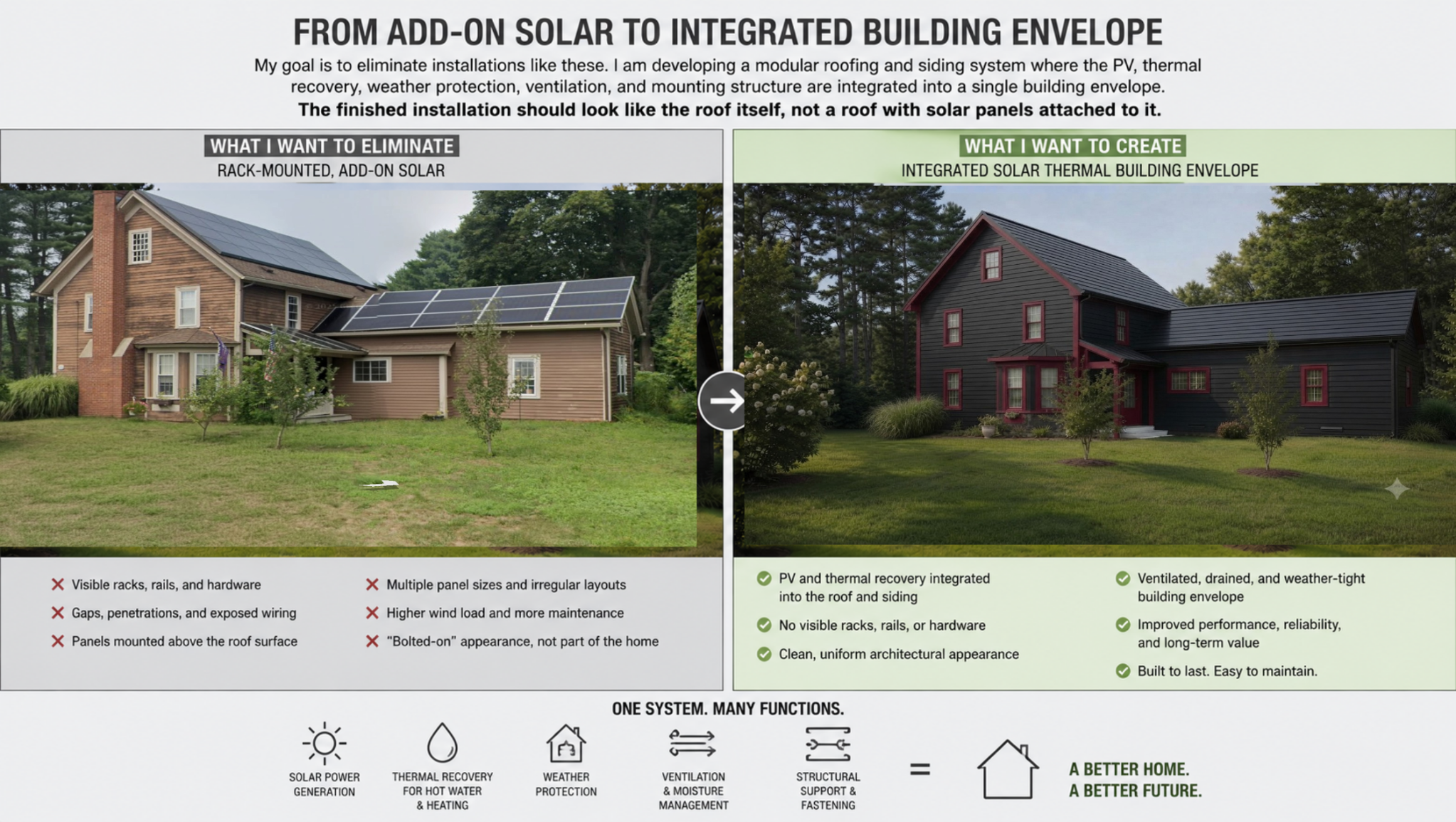
Side-by-side comparison: rack-mounted add-on solar on a farmhouse roof versus the same house finished with an integrated ultra-black horizontal solar clapboard envelope on roof and walls.
Finished installation should look like the building itself — not a roof with panels attached.
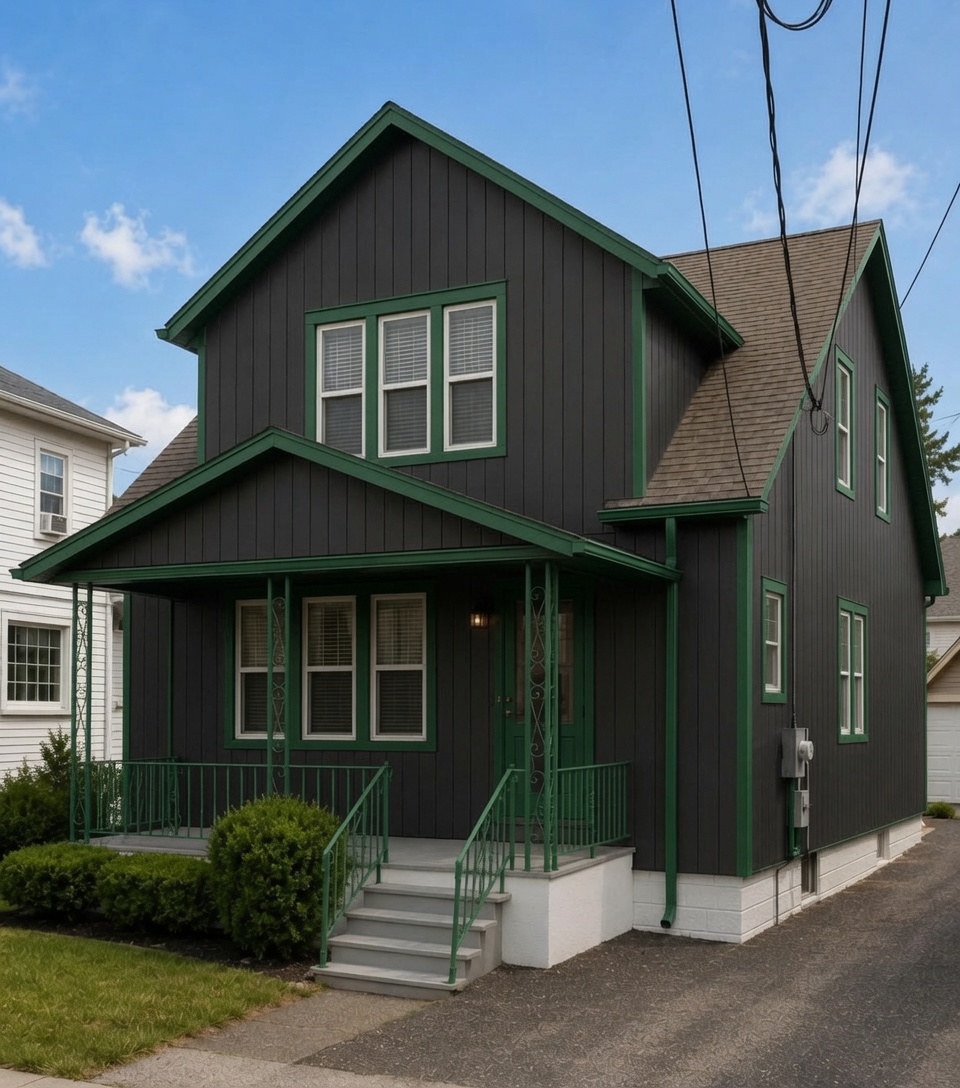
Homeowner’s house — target exterior look for the property: dark finished envelope aesthetic. Not an Energy Skin install or completed case study.
Target look for the property — a finished envelope that reads as the house, not panels on a house.

All-day wall + roof curve

Orienting generation across both walls and roof stretches the production profile beyond a single roof plane. Morning and afternoon wall exposure complements the midday roof contribution — a fuller daily curve from the building itself.

Heat capture, not just kilowatts

Bolt-on solar is electricity only. Energy Skin treats heat recovery as a core purpose of the envelope — capturing thermal energy from the assembly so the building contributes to heating strategy, not only to the electric meter.

The reclad moment

Cost is framed as a thesis for when the exterior is already open: the power-and-heat package targets roughly ~20–30% over conventional premium cladding, versus stacking roof PV and siding separately. An upgrade path at reclad — not a separate solar campaign on a finished house. Target estimate, not a site quote.

Stacking a traditional roof-plus-solar-plus-siding package on a Massachusetts home often runs high relative to doing the envelope once at reclad — exact figures depend on the house; a site assessment is required.

Bolt-on roof solar

Modules on top of a finished roof. Electricity as an add-on. Siding stacked separately.

Energy Skin

Whole-house envelope: PV + heat recovery + rainscreen — wall and roof, integrated, with matching non-PV faces.

See the Energy Skin vision.

From a finished roof to the layers behind it, these visuals show the direction of the system under development. Select an image to view it at full size.

01 / The finished roof

A continuous, architectural surface with active and matching non-PV areas.

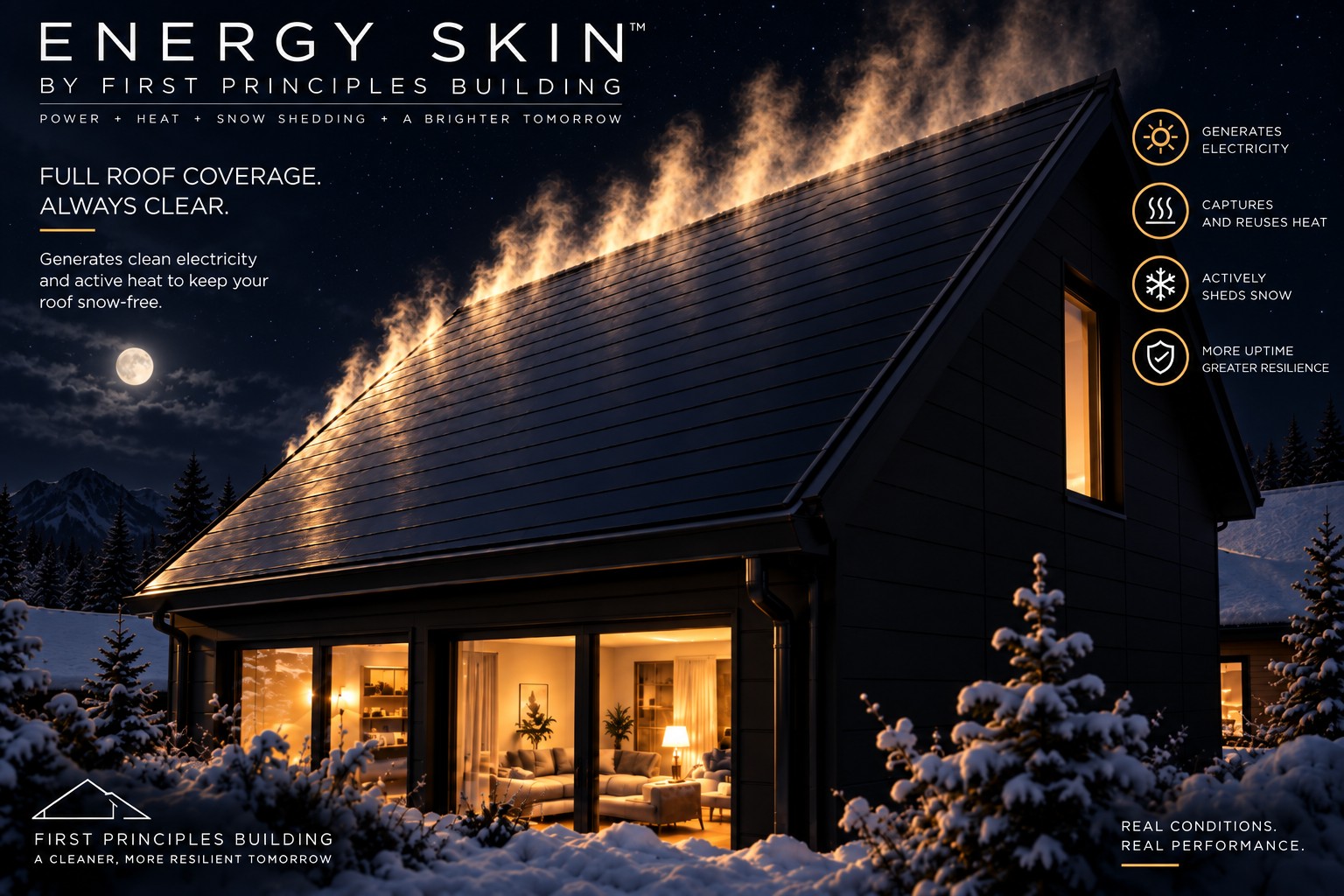
Concept rendering of a dark Energy Skin roof at night, with snow around the home and warm interior light
Night conceptFull roof coverage, pictured in winter.
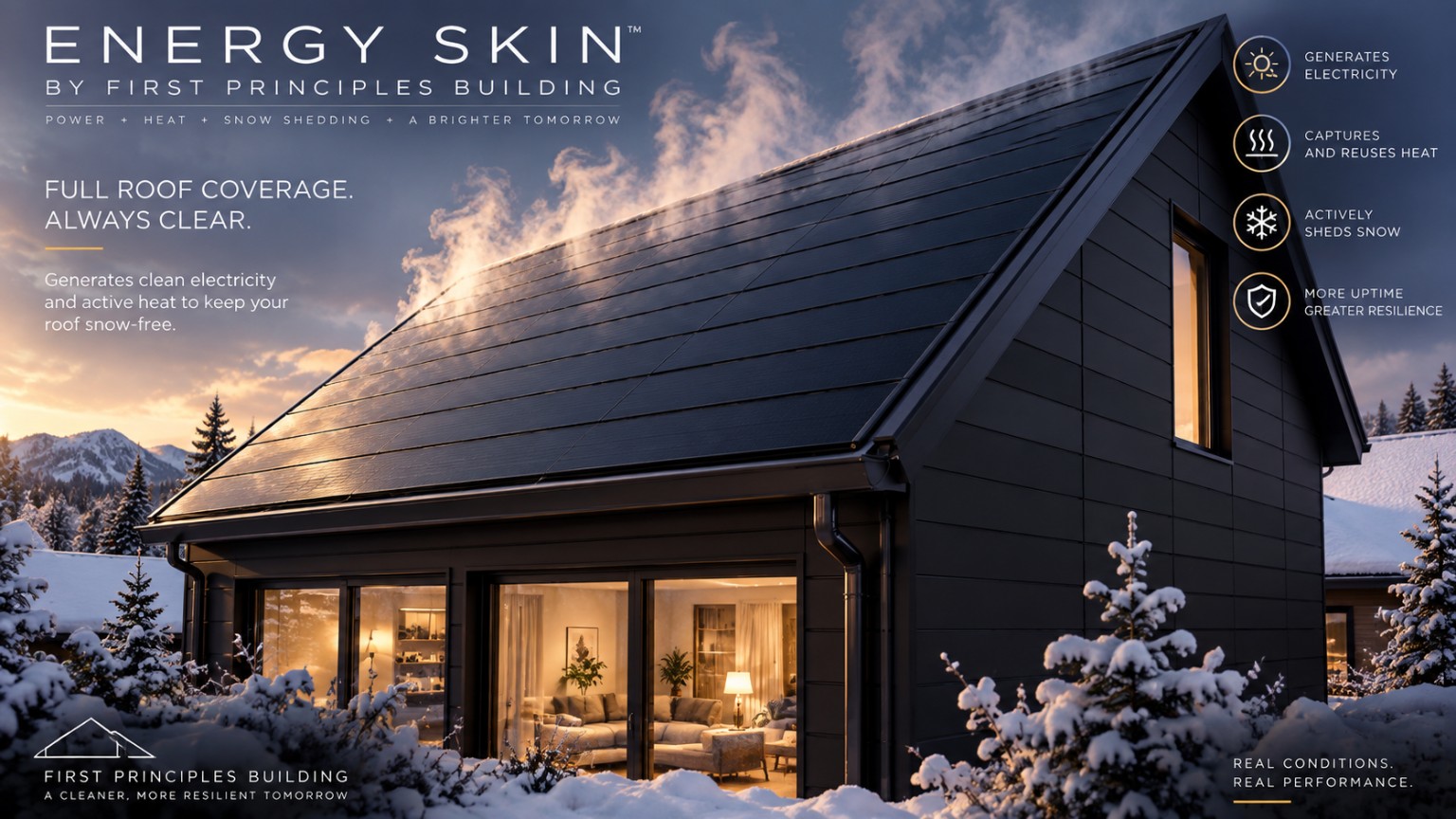
Concept rendering of the same dark Energy Skin roof at dusk, showing the horizontal roof courses
Dusk conceptHorizontal courses give the roof a unified finish.
02 / Winter strategy

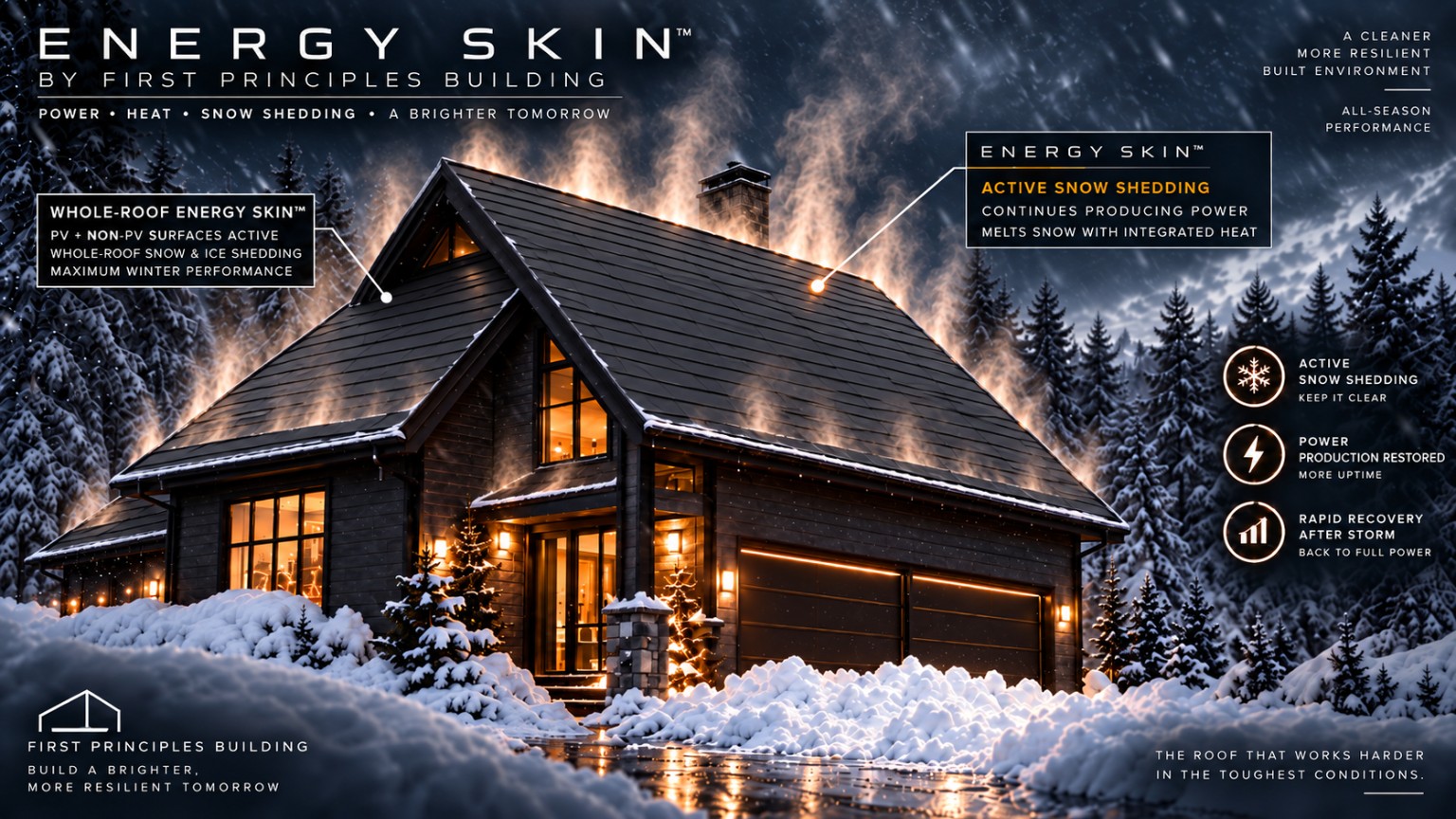
Integrated thermal control is being developed for active snow and ice management across the roof, including non-PV surfaces.

Illustrative winter scene showing a mostly clear Energy Skin roof surrounded by snow
Clear roof conceptIllustration of the intended result after snow removal.
03 / Behind the surface

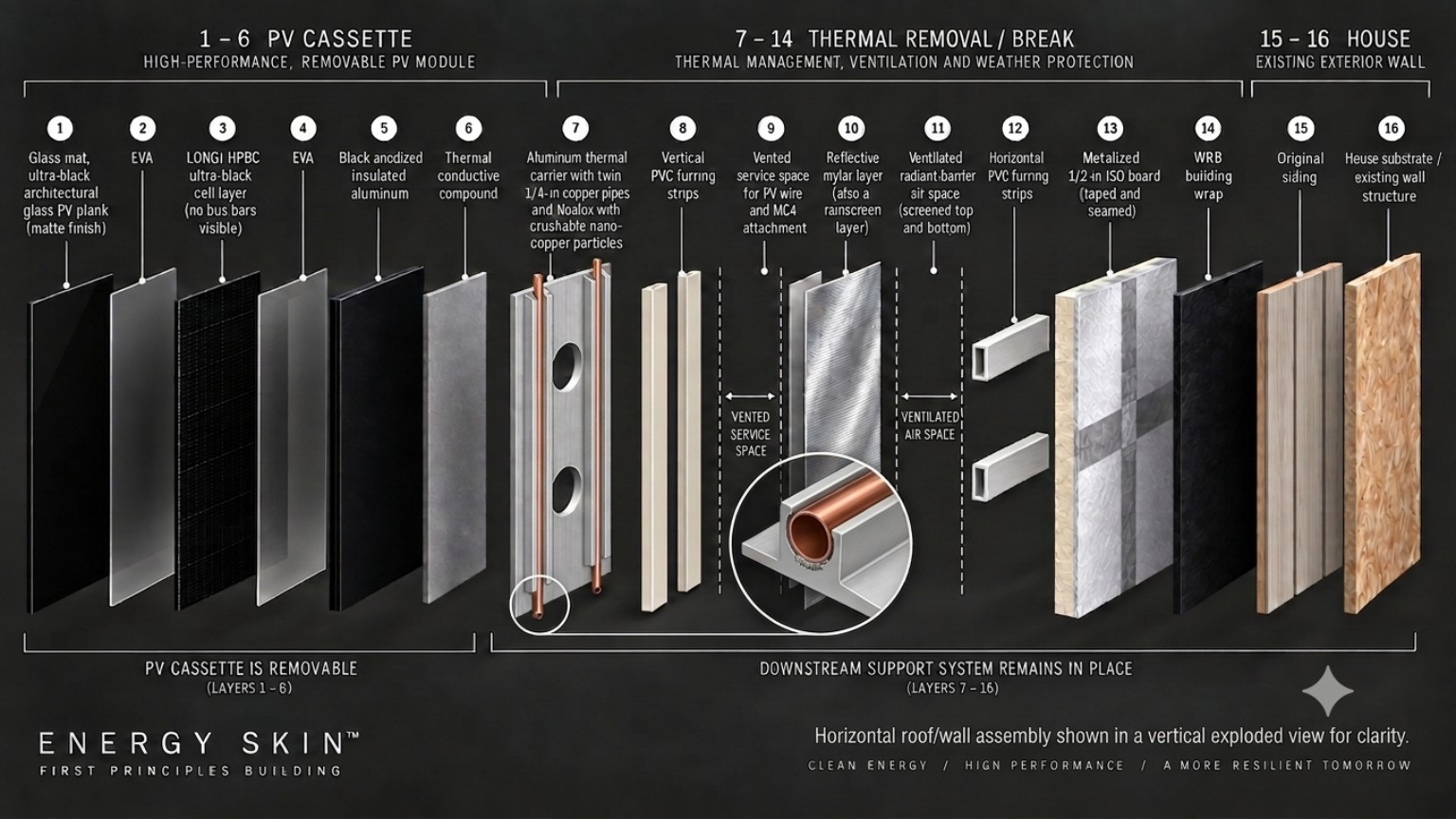
Replaceable PV face, thermal carrier, copper tubing, and a ventilated support assembly.

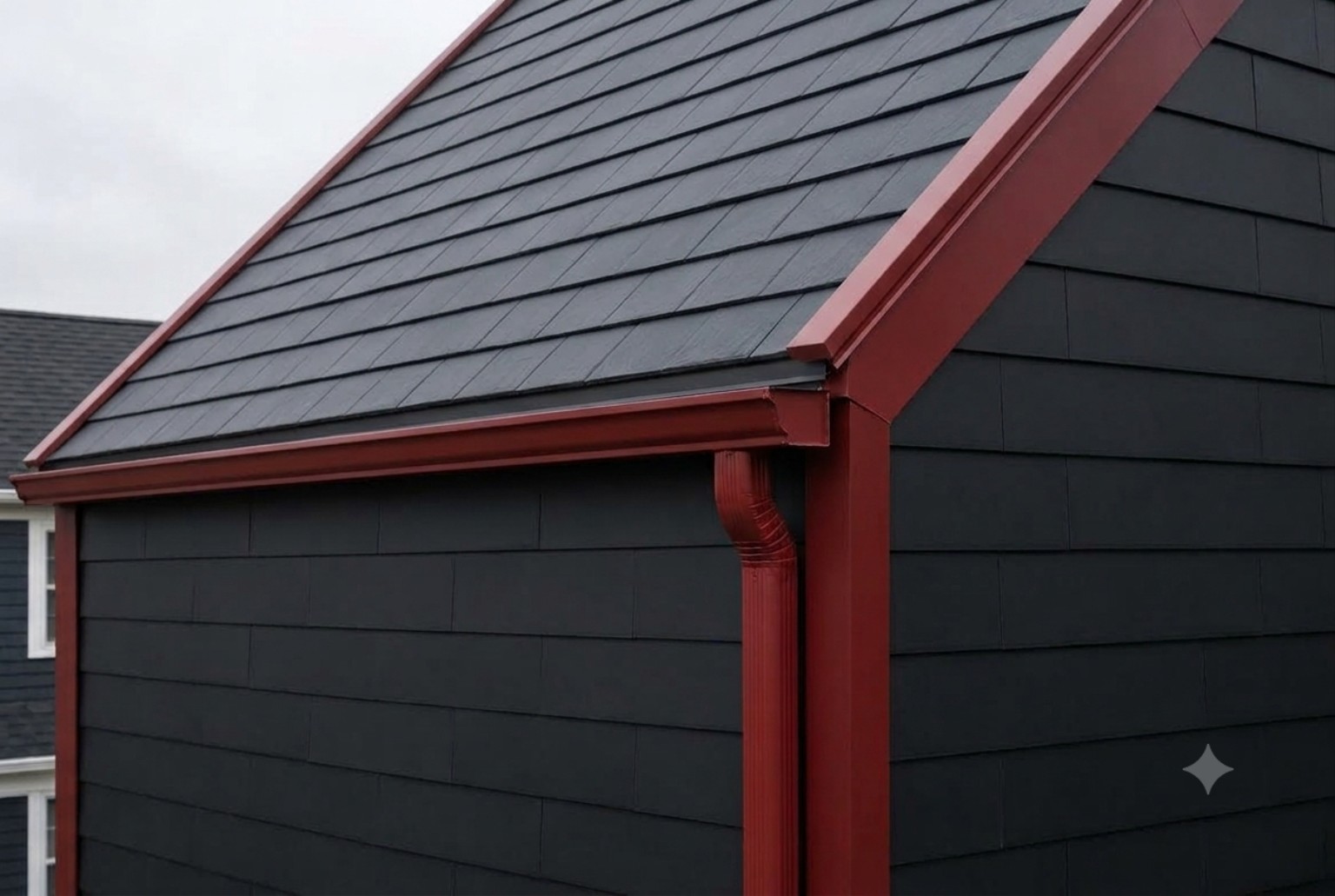
Concept close-up of dark overlapping roof courses and contrasting edge trim
Roof edgeConceptual finish and trim detail.
Exploded concept diagram of the Energy Skin PV cassette, aluminum thermal carrier, copper tubes, ventilation layers, and existing wall
Assembly conceptHow the removable face and support layers relate.
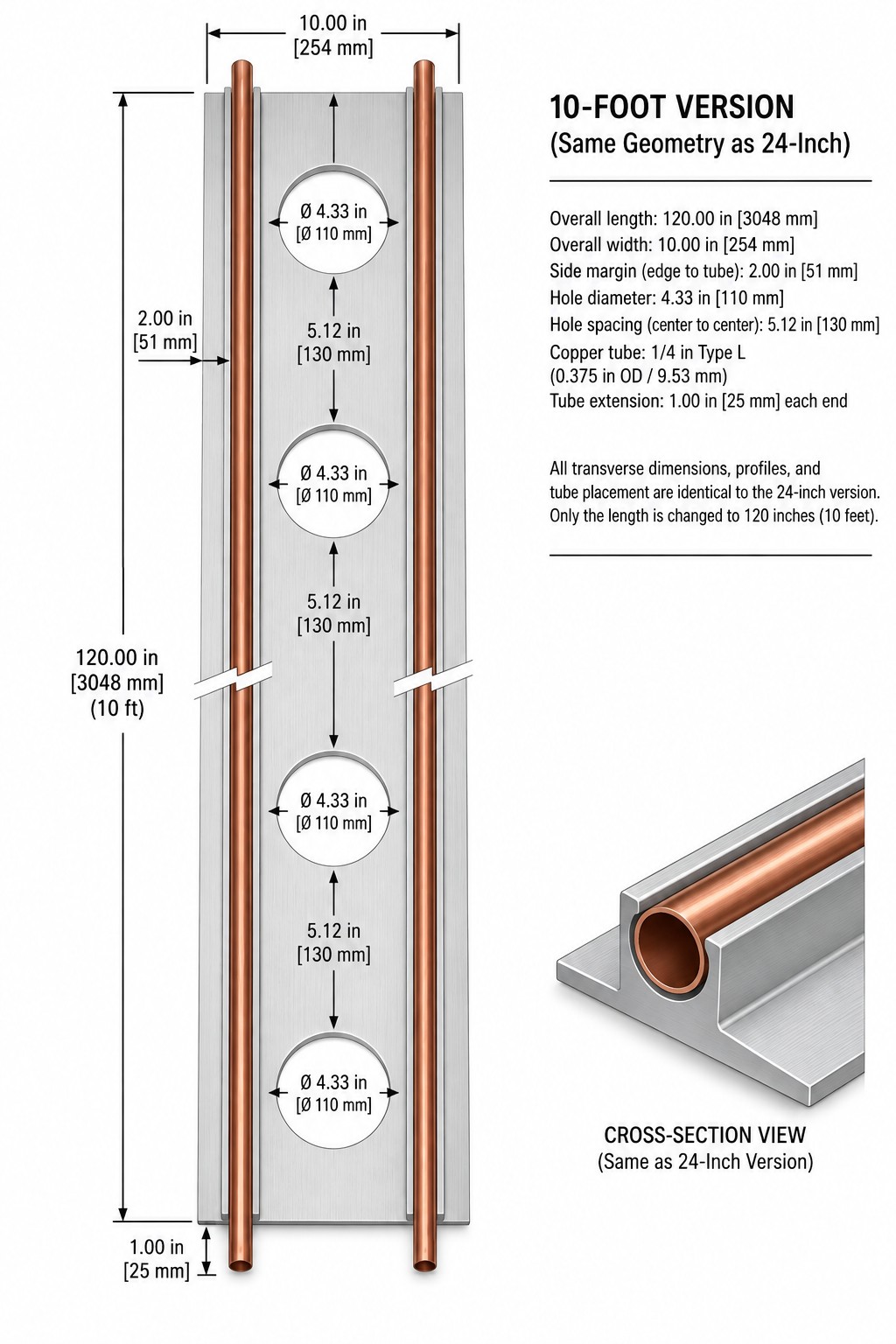
Early dimensional study of a long aluminum thermal carrier with copper tubes along both outer edges
Thermal carrier studyIllustrative geometry; dimensions and specifications require engineering validation.

Concept renderings and preliminary design studies. They do not depict a completed installation or establish verified energy output, snow clearing performance, or final construction specifications.

Massachusetts homeowners — retrofit and new.

Energy Skin is for homeowners in Massachusetts at a reclad or premium-siding decision — whether you are renovating an existing house or specifying the exterior on a new build. If cladding and roof are already on the table, and energy is part of the brief, this is the conversation.

  • Retrofit: siding replacement, reroof, or envelope upgrade
  • New construction: integrated exterior from the start
  • Preferring a whole-building skin over bolt-on roof solar

First Principles Building develops Energy Skin from the physical requirements of the envelope. We do not invent testimonials, pricing, or certifications.
Request a site assessment or builder-partner introduction.

Share a few details about your property, whether this is retrofit or new, and what you hope to learn. We will follow up directly.

Opens your mail app with a prefilled message — or email or call us directly using the contacts at left.